
Let's name the tension
One of you has been curious about lemon vibrators. Maybe you've seen them, read about how they feel different, or realized that something's missing in your current rhythm. The other person isn't there yet. Maybe they think toys mean something's wrong. Maybe they're worried it means you're not satisfied. Maybe they just feel uncertain.
This disagreement is not a sign that you're broken. It's actually a really common place where couples get stuck, because pleasure and insecurity can look identical from the outside.
Why partners land in different places
There are basically four reasons one person in a relationship wants to explore lemon sexual toys and their partner hesitates.
First: different sexuality timelines. One partner may have always been comfortable with sex toys. The other person grew up with messaging that toys are a last resort, or something only single people use. That difference is real and it matters. You're not comparing apples to apples—you're comparing two different upbringings.
Second: fear of inadequacy. This is the big one. If you introduce a lemon clitoral vibrator into partnered sex, some partners hear it as "you're not enough." This is almost never what's actually being said, but the feeling is real. And it's worth addressing directly.
Third: control and autonomy. Introducing a toy changes the dynamic of sex. It means letting go of some control, and for partners who find safety in predictability, that can feel threatening.
Fourth: simple inexperience. They've never held a toy, never felt what one does, never had a partner use one during sex together. Unfamiliar = risky, in the brain's quick assessment. That changes when you make it familiar.
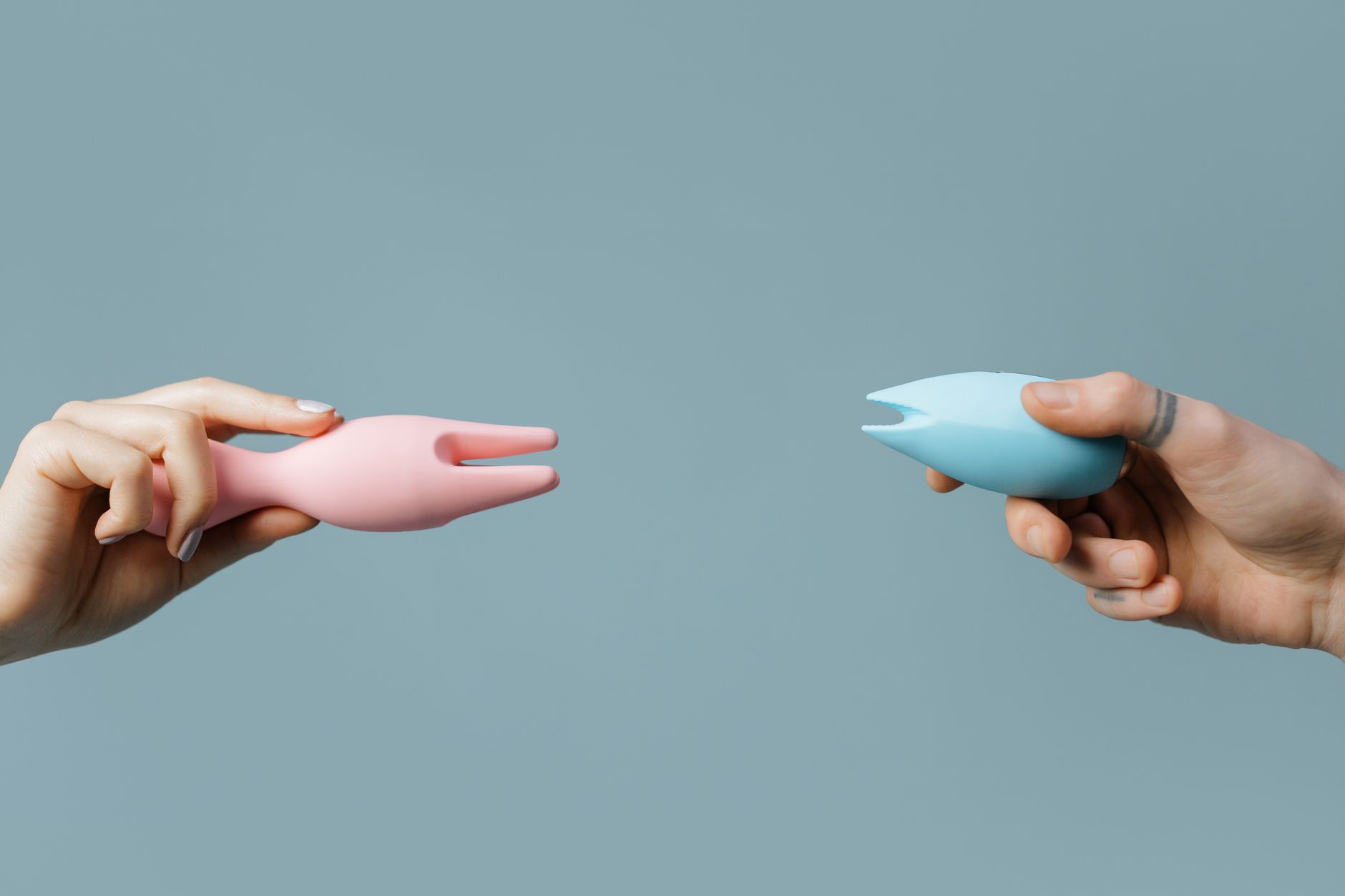
Photo by cottonbro studio on Pexels
The conversation you actually need to have
Most couples try to negotiate toy boundaries in the moment, during or just before sex. This almost never works. You're already in a vulnerable state. Your body is activated. Your defenses are down. That's not the time to address fear.
Instead, have this conversation at a completely different time. Not in bed. Not after sex. Not when you're about to have sex. Sit down on the couch with tea, take a walk, pick a moment when you both feel calm and present.
The person who wants to explore lemon vibrators should go first. And instead of saying "I want to use a toy," say something like this:
"I've been thinking about trying a lemon clitoral vibrator. I want to tell you why, because I think there's a misunderstanding I want to clear up before we talk about whether we do this together." Then tell the truth. Is it because you want more sensation? Because you've noticed your pleasure is harder to access? Because you're curious? All of these are legitimate. None of them mean your partner is inadequate.
Then ask: "What comes up for you when I say that?" And listen. Not to fix it. Not to convince them. Just to understand what they're actually worried about.
Most of the time, the thing they're worried about is not the toy. It's what the toy represents. And once you name that, you can actually talk about it.
Common fears and what actually helps
"You're not satisfied with me." The honest answer might be: you want different things at different times, and that's not about them. Lemon clitoral vibrators create a type of sensation that's hard for a hand or penis to replicate. That's not because hands or penetration are bad. It's because suction stimulation is fundamentally different. That's not criticism. It's anatomy.
"Toys are weird / slutty / not for us." This one often comes from family messaging or cultural background. It's worth asking: where did you learn that? Is that actually what you believe, or is it what someone told you to believe? Some partners shift their whole perspective once they realize the rule they're following isn't theirs.
"I'm worried I'll be watching instead of participating." This one is solvable. You can use a lemon sucker toy together. They can hold it. You can guide their hand. Or they can touch you while you use it. The toy doesn't have to replace them. It can be another element in something you're doing together.
"I don't want things to change." Change is already happening. Your body is changing. Your desires are evolving. What's actually on the table is whether you navigate that together or separately. Usually, couples who address it together end up closer.
The trial that changes minds
Once you've talked, the next step isn't jumping straight to partnered sex with a lemon vibrator. It's letting your hesitant partner hold one. Feel the weight. See how it works. Maybe use it on themselves alone, if they want to. Familiarity is the fastest way to move from fear to curiosity.
If they're still resistant, you might also try a guide on using lemon clitoral vibrators when your partner wants penetration but you prefer external stimulation. That article focuses on the practical choreography of how you both stay engaged when you're using different kinds of stimulation. Sometimes seeing the "how" makes the "whether" feel less scary.
Once they're ready, start small. Use the toy during foreplay, not as the main event. Let them see what happens to your body. Most partners who watch their partner's genuine pleasure response during lemon vibrator use don't stay skeptical for long. Seeing you actually enjoy something is more convincing than any argument.
Building toward shared pleasure
The hardest part is usually the conversation. Once you're actually doing it, most couples discover something neither of them expected: using lemon sexual toys together is often more intimate than sex without them. Because it requires communication. It requires checking in. It requires you to stay present with each other instead of just following a script.
Your partner might also discover that they want to use a toy sometimes too. Or that they love watching you use one. Or that they want to be the one holding it during sex. The point isn't that everyone ends up wanting the same things. The point is that you're making decisions together, not hiding or resentful.
Boundaries can shift. What feels wrong today might feel right in six months. Or it might not, and that's fine too. But the conversation—the actual willingness to talk about what you both want and need—that's what builds a relationship that can hold desire for the long term.
FAQ: Navigating toys and partnership
What if my partner says no and won't budge?
Then you have a choice to make. You can accept the boundary and let it go. You can use lemon clitoral vibrators on your own time, which is a totally valid choice. Or you can explore whether this is actually about the toy, or whether it's about something deeper in your relationship that needs attention—like trust, communication, or feeling seen. Sometimes a toy disagreement is really a relationship disagreement in disguise. A therapist can help you figure out which.
Can I use a lemon vibrator without telling my partner?
Technically yes. But I wouldn't recommend it. Secrecy erodes trust, and eventually partners find out. When they do, the betrayal often feels bigger than the original toy would have. The conversation upfront is harder, but it's worth it.
What if they want to use lemon vibrators but I don't?
Then the roles are reversed, but the conversation is the same. Let them explain what appeals to them. Sit with any insecurity that comes up. And decide what boundary actually works for you. You don't have to enthusiastically welcome a toy into partnered sex if it genuinely doesn't appeal to you. But it's worth exploring whether it's "not for me" or "I'm scared."
How do we actually use a lemon sucker toy together if we're uncomfortable?
Start by using it separately in the same room. Then have them hold your hand while you use it. Then you guide their hand. Then they hold it while you lie back. The progression is gradual and it gives you both time to adjust. There's no rush.
Is it normal to feel jealous when your partner wants to use toys?
Completely normal. And it's worth paying attention to. Jealousy often contains real information about what you need—more touch, more communication, more affection outside of sex. Address the jealousy, not just the toy.
Can couples' therapy help with this?
Yes. A good therapist can help you both understand what's actually at stake in the disagreement, and help you find a solution that feels safe to both of you. This is actually a common issue couples bring to therapy, so you're not starting from scratch. If you're stuck on this conversation, getting professional support is a sign of strength, not weakness.
The actual path forward
Disagreement about lemon vibrators, lemon sexual toys, or any sex toy isn't about the object. It's about trust, desire, identity, and what it means to be vulnerable with someone. Once you separate the emotional stuff from the practical stuff, most couples find a way through.
Your pleasure matters. Your partner's comfort matters too. And usually, with patience and actual conversation, you can honor both. If you're stuck on how to navigate this in your specific relationship, reaching out to a couples counselor or contacting my team for resources can help. You don't have to figure this out alone.
References and further reading
- Gottman, J. M., & Silver, N. (2015). The Seven Principles for Making Marriage Work. Harmony.
- Cacchioni, T. (2007). "The medicalization of sexual dysfunction: An exploration of the rhetoric of pharmaceutical advertising." Sociology of Health and Illness, 29(5), 655-679.
- Perel, E. (2006). Mating in Captivity: Unlocking Erotic Intelligence. HarperCollins.