Let's name the thing nobody talks about
You can orgasm alone. You can orgasm reliably, intensely, fast. But the moment your partner is in the room, watching, waiting, or even just quietly present, something in your nervous system hits the brakes hard. Your body tenses. Your mind goes quiet. The arousal that was building vanishes.
This is not a personal failure. It's not a sign you don't want your partner. It's a nervous system response to performance pressure, and it's weirdly common.
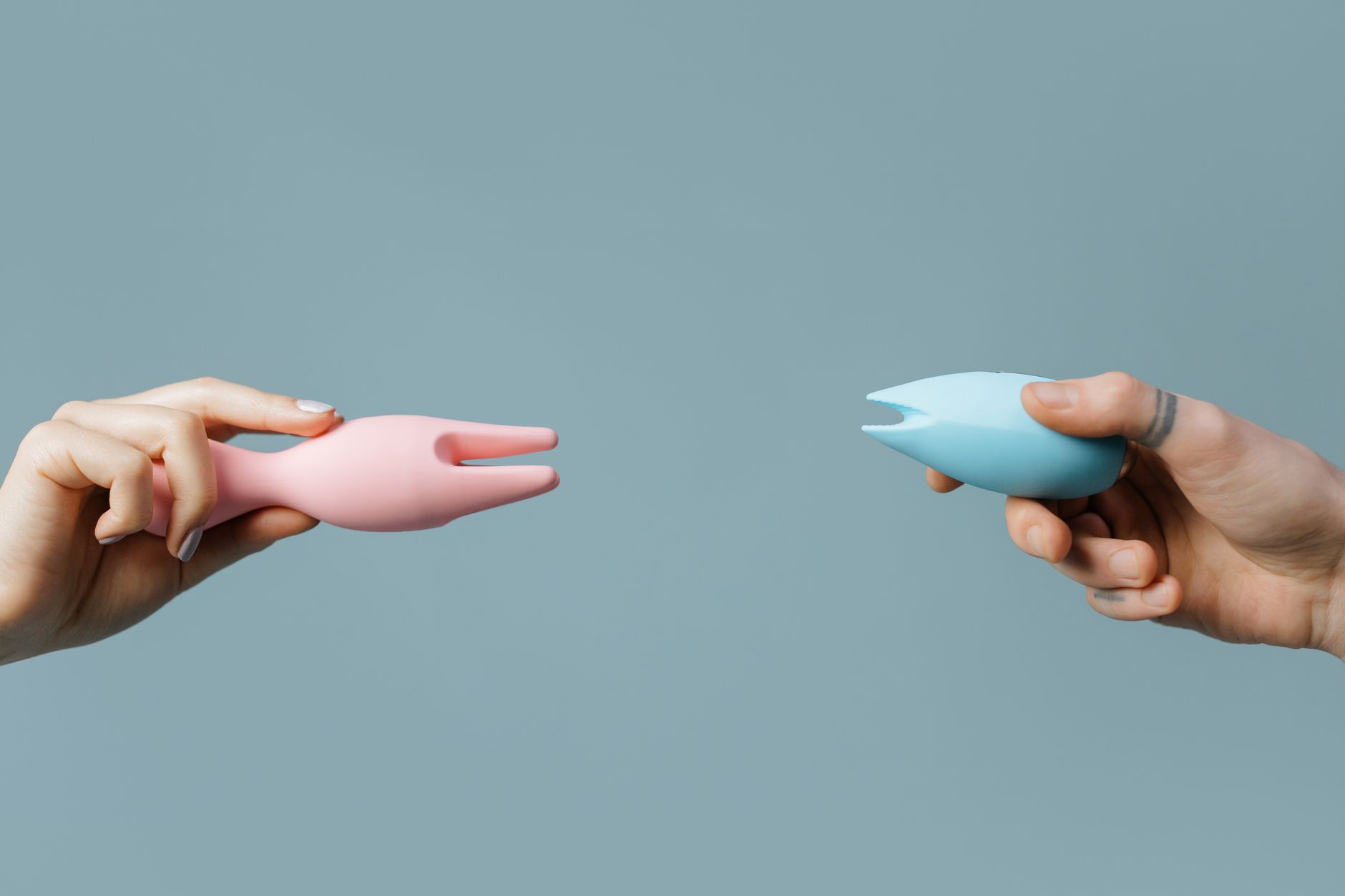
Here's what I see in my practice: people in loving, stable relationships who feel completely disconnected from pleasure the second another person's attention lands on them. The solution isn't more foreplay or a different position. It's understanding what's actually happening in your body, and then using tools like lemon clitoral vibrators to deliberately shift the dynamic.
Why partner presence kills arousal
When you're alone, your nervous system is in what I call a "closed loop." You decide when to speed up, slow down, change intensity. You don't have to anticipate anyone else's needs or manage anyone else's expectations. Your brain stays focused inward.
The moment someone else is present, even silently, your nervous system automatically shifts into monitoring mode. Part of your attention leaves your own sensation and moves to: Is he enjoying this? Am I taking too long? Does she think I'm strange? Do I look weird? Is this taking forever?
That's not distraction. That's your nervous system doing its job. It's scanning for social threat. And arousal cannot happen while you're simultaneously scanning for threat. The two states are neurologically incompatible.
Add in the pressure to perform or produce an orgasm on schedule, and now you're actively working against yourself. The harder you try to orgasm, the more you're telling your body that orgasm is a goal, a task, a performance metric. Your nervous system responds by tensing everything down.
What lemon vibrators change about this dynamic
A lemon clitoral vibrator doesn't solve the performance anxiety directly. But it does something smarter. It externalizes the stimulation.
When you're using your hand alone, your partner is watching you work. They're waiting for a result. But when you're using a lemon sucker or any high-quality clitoral vibrator, the device becomes the active agent. Your partner is no longer watching you struggle to find the right angle or speed. They're watching a tool do its job.
This small shift in framing relieves something in your nervous system. You've moved from "I have to produce an orgasm" to "I'm using a tool that's designed to work with my body." The pressure loosens.
Second, lemon vibrators are fast and consistent. They don't get tired, don't second-guess the pressure, don't need encouragement. If you're someone whose brain is spinning with anxiety, that consistency becomes a kind of anchor. You can actually feel the stimulation instead of just worrying about whether you're taking too long.
Third, the specific suction sensation of a lemon clitoral vibrator bypasses some of the performance anxiety because it feels different from anything you can do with a hand or mouth. Different sensation often means your brain can't compare it to old anxious patterns.
The nervous system reset that actually helps
Before you use a lemon vibrator with your partner, you need to do something counterintuitive. You need to take the pressure off completely.
I mean this literally. Have a conversation where you say: "I want to try using a toy together, but I need us to agree that the goal is sensation, not orgasm. If I have one, great. If I don't, that's also fine. The goal is just me exploring how this feels."
This reframes the entire experience. You're not failing at a goal. You're experimenting. You're curious. Your partner isn't a spectator at your performance. They're part of a shared exploration.
What you're actually doing is creating permission for your nervous system to downshift from threat detection. You're saying out loud: there's no test here. There's no pass or fail.
Then, when you use the lemon vibrator, you get to feel what genuine pleasure without an audience feels like, but with your partner nearby. Over time and repeated use, your nervous system learns that partner presence doesn't equal threat. The pathways rewire.
Practical steps for the first time
Start with a conversation, not a surprise introduction. Something like: "I've been thinking about trying a vibrator together. I'm a bit nervous about it, but I trust you. Could we try it and just see how it feels?"
Note what you're doing here: you're being honest about the nervousness, which actually reduces it. You're also not centering his pleasure or his comfort. You're making it clear this is about you exploring your own pleasure.
When you actually use it, start alone first if you can. Use your lemon vibrator solo for a few sessions to remember what it feels like, what patterns you like, what intensity works. This is your baseline.
Then, have your partner in the room but not touching you. You're using the vibrator on yourself while they're present. This is the smallest possible increase in pressure. If that feels manageable after a few times, then try having them touch you elsewhere. Your hand or theirs can stimulate other parts of your body while you use the lemon vibrator where you need the most sensation.
Many people find that external stimulation from a partner on the inner thighs, breasts, or neck actually helps when they're using a clitoral vibrator. It gives your partner something active to do besides wait and watch. It grounds you in partnership instead of performance.
When communication matters more than the toy
Honestly, the lemon vibrator is just equipment. The real shift happens in the conversation.
If your partner responds to "I want to try using a toy with you" with defensiveness, jealousy, or pressure, that's information. That's telling you that partner's nervous system is also activated. And no toy, no matter how well-designed, can fix a nervous system problem that lives in both people.
In my couples work, the best outcomes happen when both partners understand that difficulty reaching orgasm during partnered sex is not a statement about attraction or desire. It's information about how that specific person's nervous system responds to novelty, pressure, or vulnerability.
Sometimes using a lemon clitoral vibrator becomes a bridge back to pleasure. Sometimes it just becomes a tool that works better on certain days when you're more anxious than others. Both outcomes are fine.
What's not fine is using a toy as a workaround for unresolved communication issues. If your partner is resentful about using a vibrator, or if you feel ashamed asking for one, the toy won't actually solve that. It might temporarily bypass it, but the underlying dynamic remains.
The thing that shifts everything
After years of couples therapy, I've noticed that pleasure usually returns when permission arrives first. Permission from yourself to explore without proving anything. Permission from your partner to prioritize your own sensation over their comfort. Permission to say "I need the vibrator tonight" without justifying it.
Lemon vibrators can absolutely be part of that permission structure. They're not a crutch. They're a tool that says: "My pleasure is worth the direct, efficient stimulation." And your partner gets to witness that without needing to be the instrument of it.
That's actually when deeper intimacy happens. Not when you're anxiously performing, but when you're grounded enough to actually feel.